
Online Tire Calculator — Compare Tire & Wheel Sizes
Tire calculator is a tool that compares the original tire and wheel size with a new one and calculates the difference in ground clearance, speedometer readings, and wheel offset. As a rule, the need to change the tire size is linked to increasing the wheel diameter; however, some car owners may instead want to decrease the wheel size in order to return to stock or get a softer ride. One should also not forget off-road enthusiasts: the tire calculator will show how much ground clearance will increase on this or that tire with the old wheel.
As you have understood, there are several ways to use a tire calculator. Let’s examine them in order.
Increasing the wheel diameter
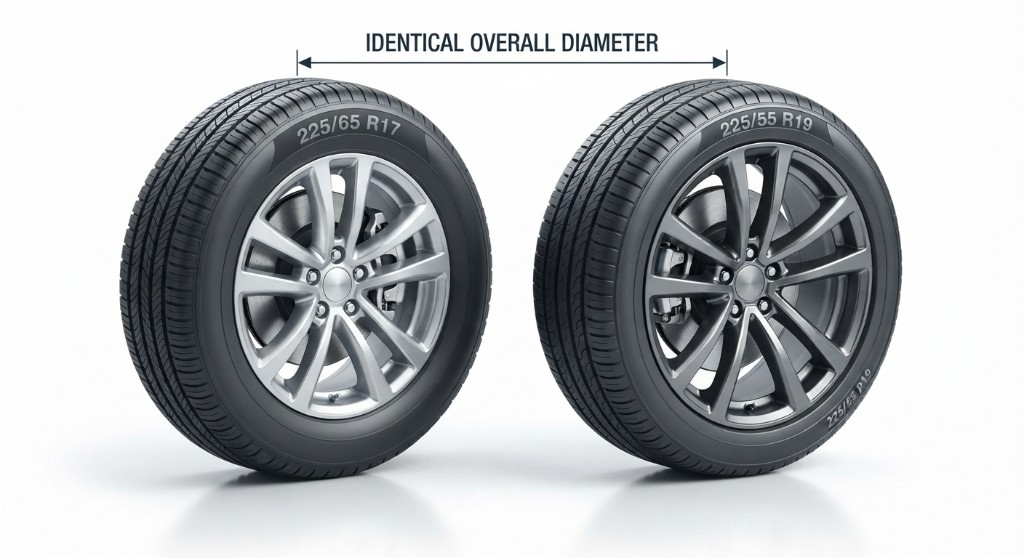
Imagine you bought a car on standard factory wheels of size 225/65 R17, but you dislike both the style of the wheels and their size and would like to fit 19‑inch wheels. If you simply repeat the tire marking for the new wheel, for example 225/65 R19, the new wheel assembly will be larger. This will make the car harder to accelerate and the speedometer will lie, which may result in speeding tickets. Therefore, for the new wheel you need to reduce the tire sidewall height, and the ideal size will be 225/55 R19.
Decreasing the wheel diameter
One of the frequent reasons for selecting tires for a smaller wheel, apart from those already mentioned, is winter tires, because manufacturers often recommend a higher-profile tire on a smaller wheel for winter conditions.
The principle of selecting tires for a smaller wheel is the same as when increasing the size.
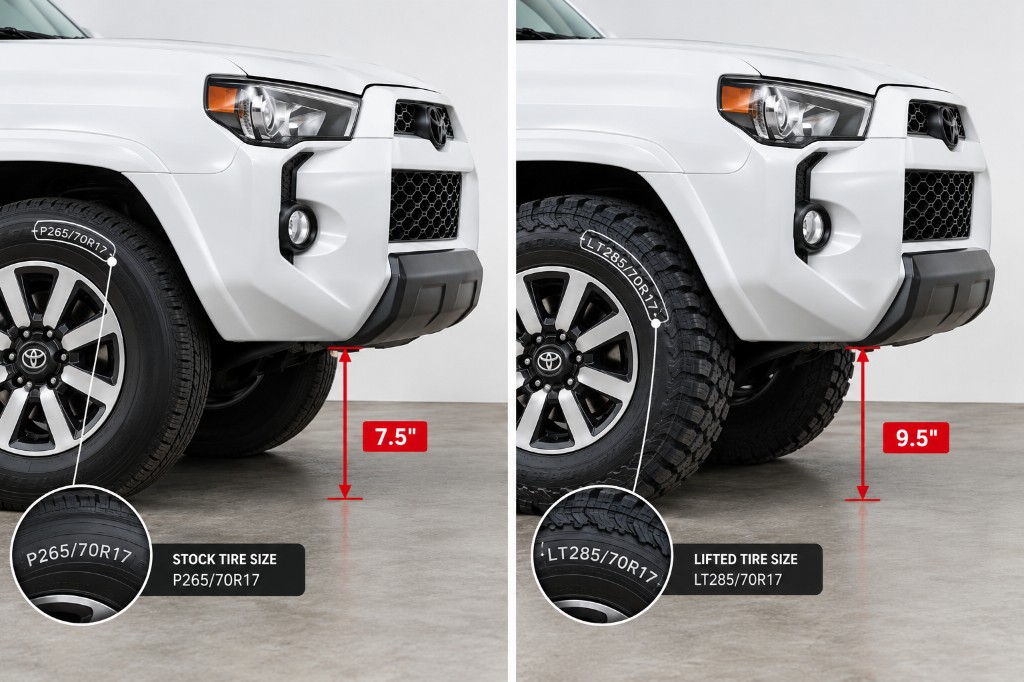
Increasing ground clearance
Although this is not recommended because of the increased load on the transmission, sluggish response, and constant error in speedometer readings, some cars have a power and torque reserve, and for them this is a way to raise ground clearance. The tire calculator shows the difference in ground clearance between the old and new tires for the vehicle. One should also remember that excessively large tires may rub against the arches and suspension components; to avoid this, it is necessary to measure the clearances on the stock wheels and compare them with the distances in the calculator, or (the most reliable way) check the recommendations in the reference data for your model and generation of the car.
Increasing tire width
Increasing tire width may lead to the tire rubbing against suspension components as well as the wheel arches. This can be compensated by increasing the wheel offset or by installing spacers; both of these actions are not recommended and you do them at your own risk.